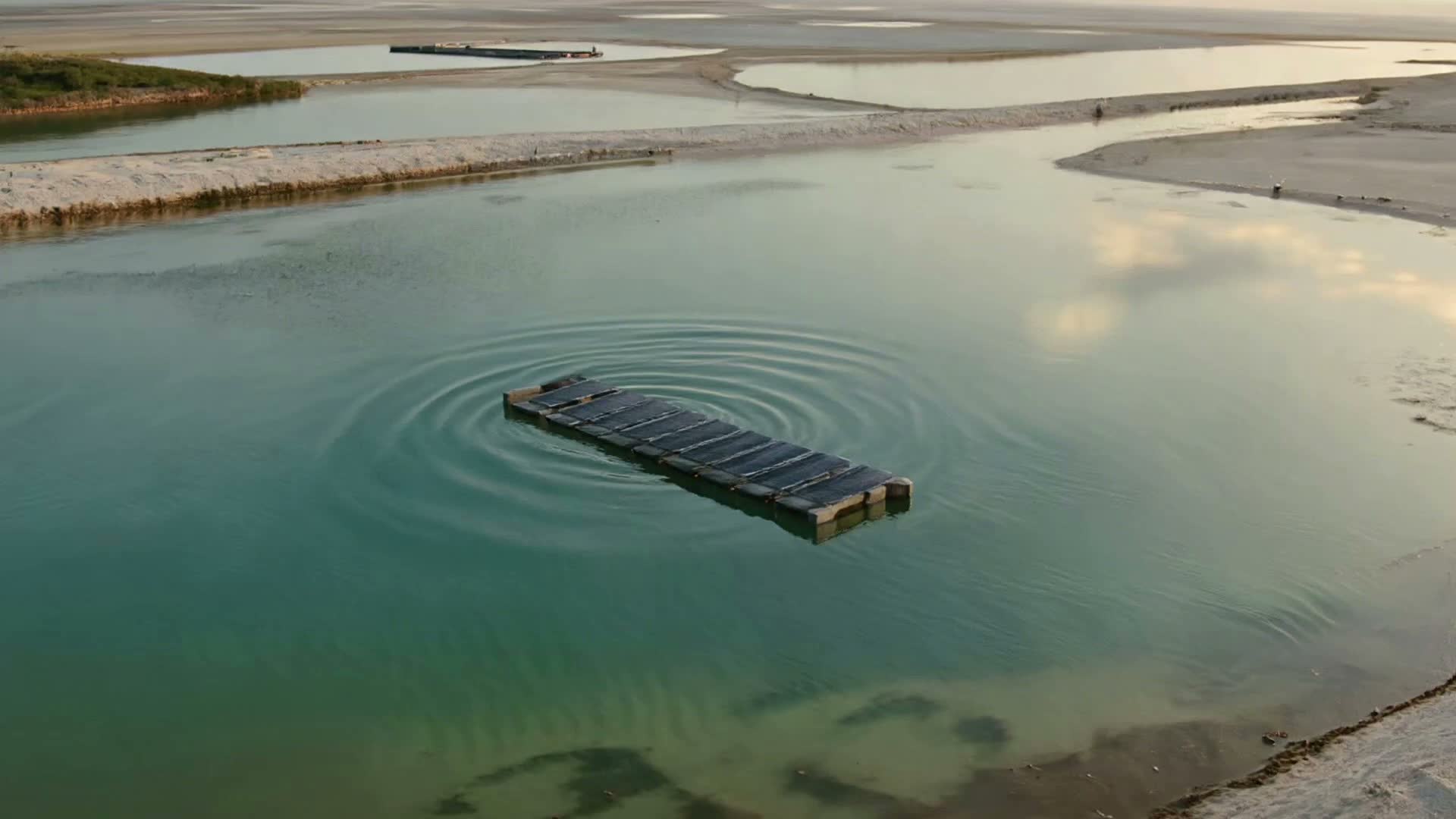
Brine ponds
Salt-cavern storage sites hold acres of near-saturated brine in open ponds. That surface is unused today.
The material problem
Porous ceramics float, but salt crystallizing in their pores destroys them. We're researching a float that controls where salt crystallizes.
Built from byproducts
Our floats use geopolymers made from industrial aluminosilicate byproducts. No plastic, no foam core.
Early-stage research venture · Frisco, Texas
The problem, in one float
- The site: Salt-cavern storage sites hold acres of near-saturated brine in open ponds. The surface sits unused.
- The array: Floating solar could use that surface, if its floats can survive the brine.
- One float: Porous ceramics float because they are full of tiny pores.
- What breaks it: Brine soaks into the pores. As the water evaporates, salt crystallizes inside them and cracks the float apart.
- The direction: We're researching a float that controls where salt crystallizes, so the float stays whole.
- Built from industrial aluminosilicate byproducts. No plastic, no foam core.